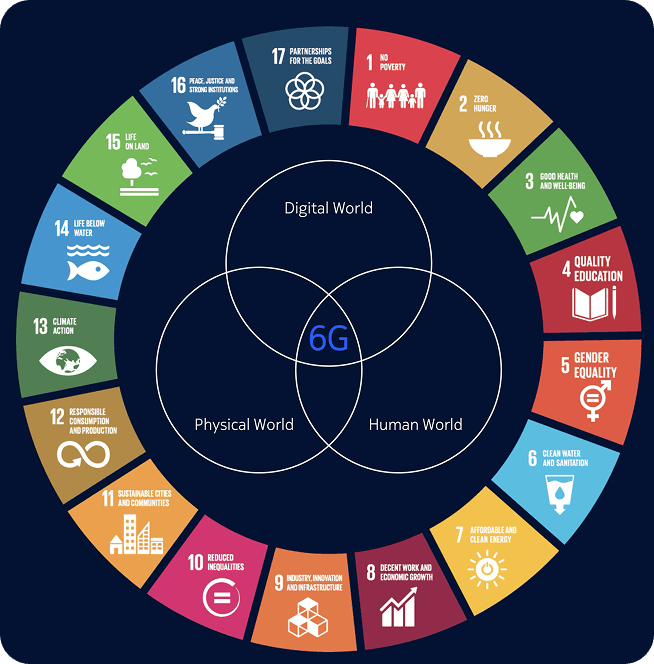
As one of two design-research trainees at Nokia over a summer, I helped reframe 6G from an engineering question into a human one. Through desk research, expert interviews, and design-thinking workshops, we moved the question from "what can 6G do" to "why would people care", and converged on human augmentation through wearables, with 6G as the connectivity that makes it viable. We delivered a research vision and a reusable workshop method, and presented both to the 6G standards team and its leaders.
Context & Stakes
6G was years from standardisation, and most of the research on it framed it as an engineering problem. We came at it as a human one.
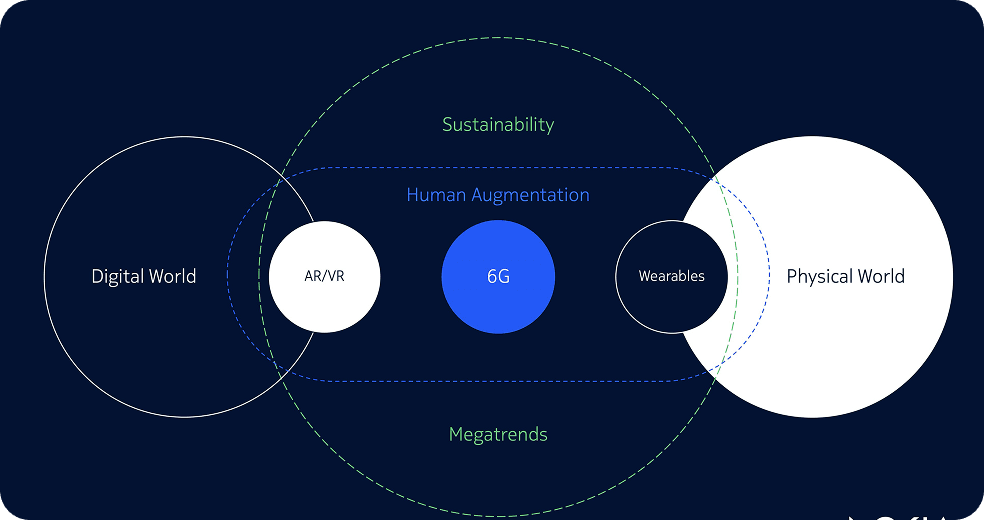
In the summer of 2023 I joined Nokia as a design-research trainee working on the future of 6G. The brief was open: apply design thinking to 6G mobile-communication research and explore where it might go. Most 6G research at the time sat in the enterprise and industrial domains, so early on we moved our project into the consumer realm, into the intersection of the digital, physical, and human worlds in everyday life, with sustainability and the UN Sustainable Development Goals as a guiding lens.
Role & Approach
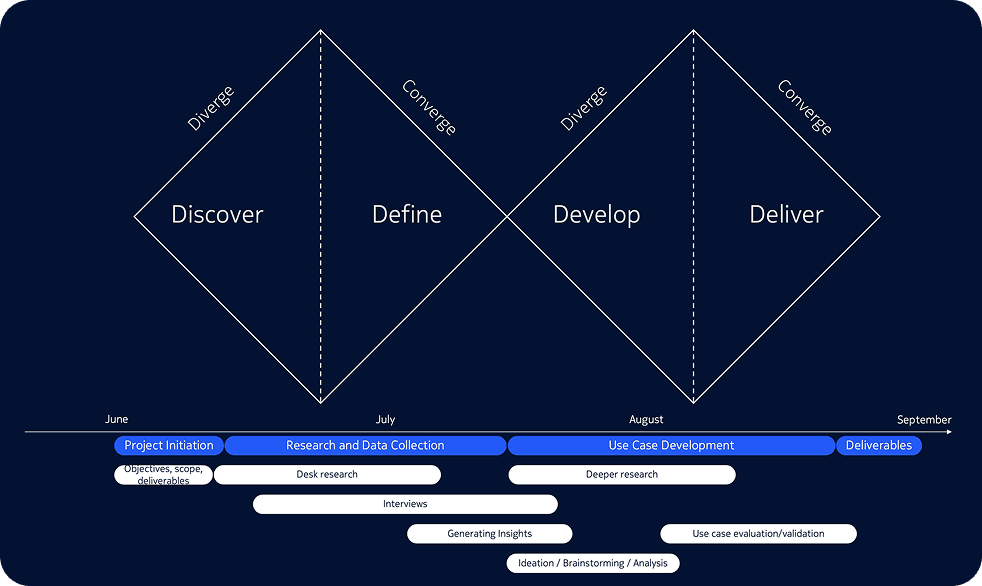
I worked as one of two design-research trainees, and we shared the work between us. We ran the summer on a double-diamond process: desk research on 6G technologies and emerging trends, expert interviews with domain specialists on 6G, sustainability, and use cases, and a series of brainstorming workshops to turn the research into ideas.
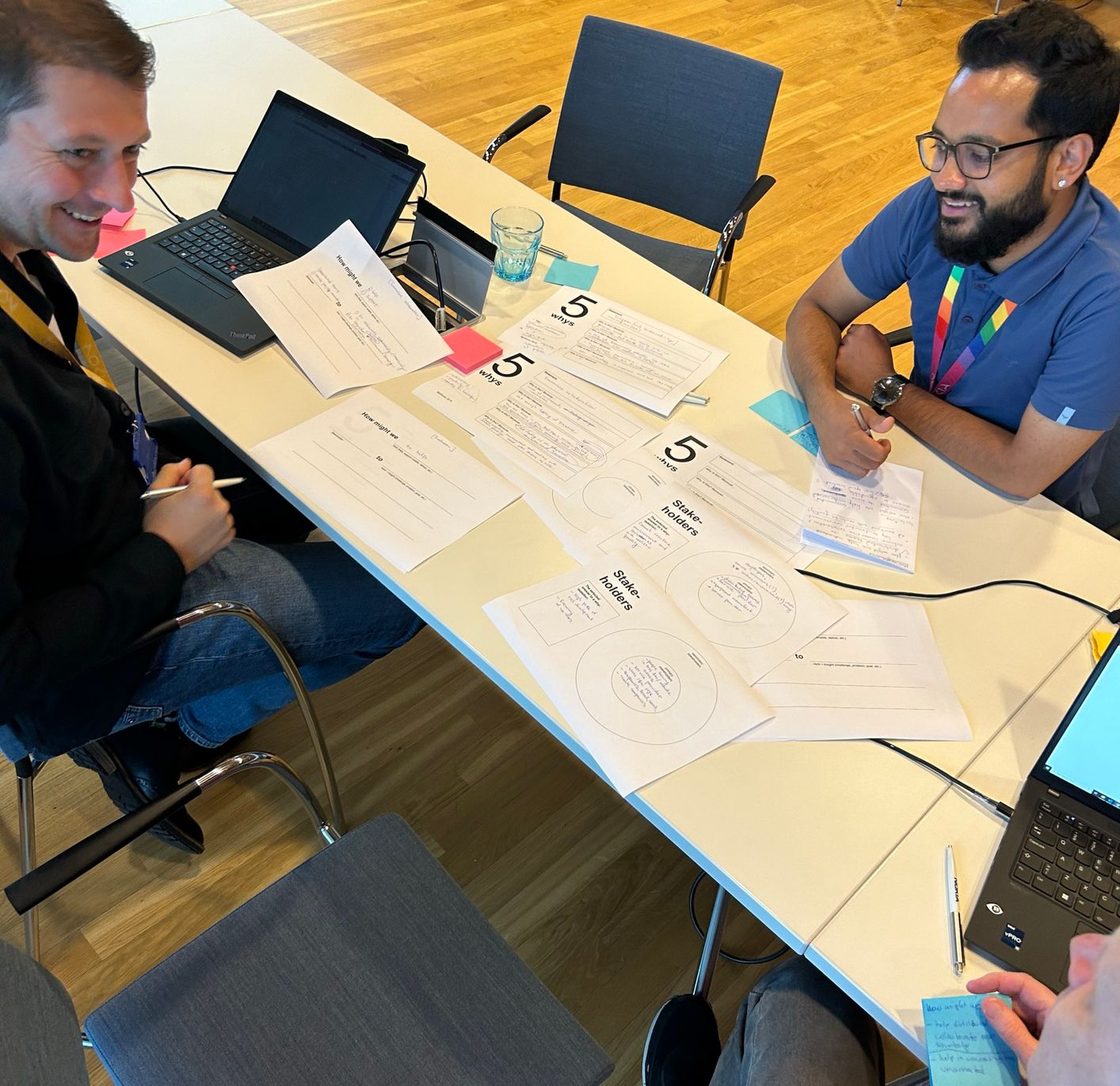
My clearest contribution was on the design-thinking side. I co-created and helped run a design-thinking workshop that took the human-centric lens and made it something other people could use, walking the whole 6G standards team, leaders included, through a single question: what could Nokia's role be in the future of human augmentation?
What We Found
The interviews kept circling the same point. The technical leaps mattered less than a basic human question: why would anyone care to move to 6G? The themes that came back were about value, not throughput. 6G has to be human-centric and bring tangible value to people's lives. It has to be sustainable, in energy and in hardware. It has to be inclusive, reaching users who are usually left out. And it has to make economic sense for the operators who carry it. Organised against the SDGs and broader megatrends, the opportunity clustered into a few domains: health and wellbeing, learning and education, and the future of work.
Out of that, one thesis pulled the rest together: human augmentation through wearables. Wearables that extend human senses and cognition, from AR glasses to brain-computer interfaces, with 6G as the connectivity that makes them viable, carrying low-latency, high-bandwidth traffic between body and cloud in a way 4G and 5G couldn't.
Deliverables
Two things came out of the summer. The first was a design-research vision: the human-augmentation thesis, the interview insights and sustainability framing behind it, and a set of speculative "what if" use-case scenarios across health, learning, and work, each anchored to a product that exists today so the future felt concrete.
The second was a design-thinking workshop format: a reusable method that took the human-centric lens and handed it to others to apply, so the perspective could outlast a single deck.
Outcomes
A human-centric vision for 6G
A synthesised point of view, human augmentation through wearables, that reframed 6G around what it could do for people's health, learning and work.
A reusable design-thinking method
A workshop format, run with the 6G standards team so an engineering-led group could apply the human lens to 6G itself.
Presented to the team and its leaders
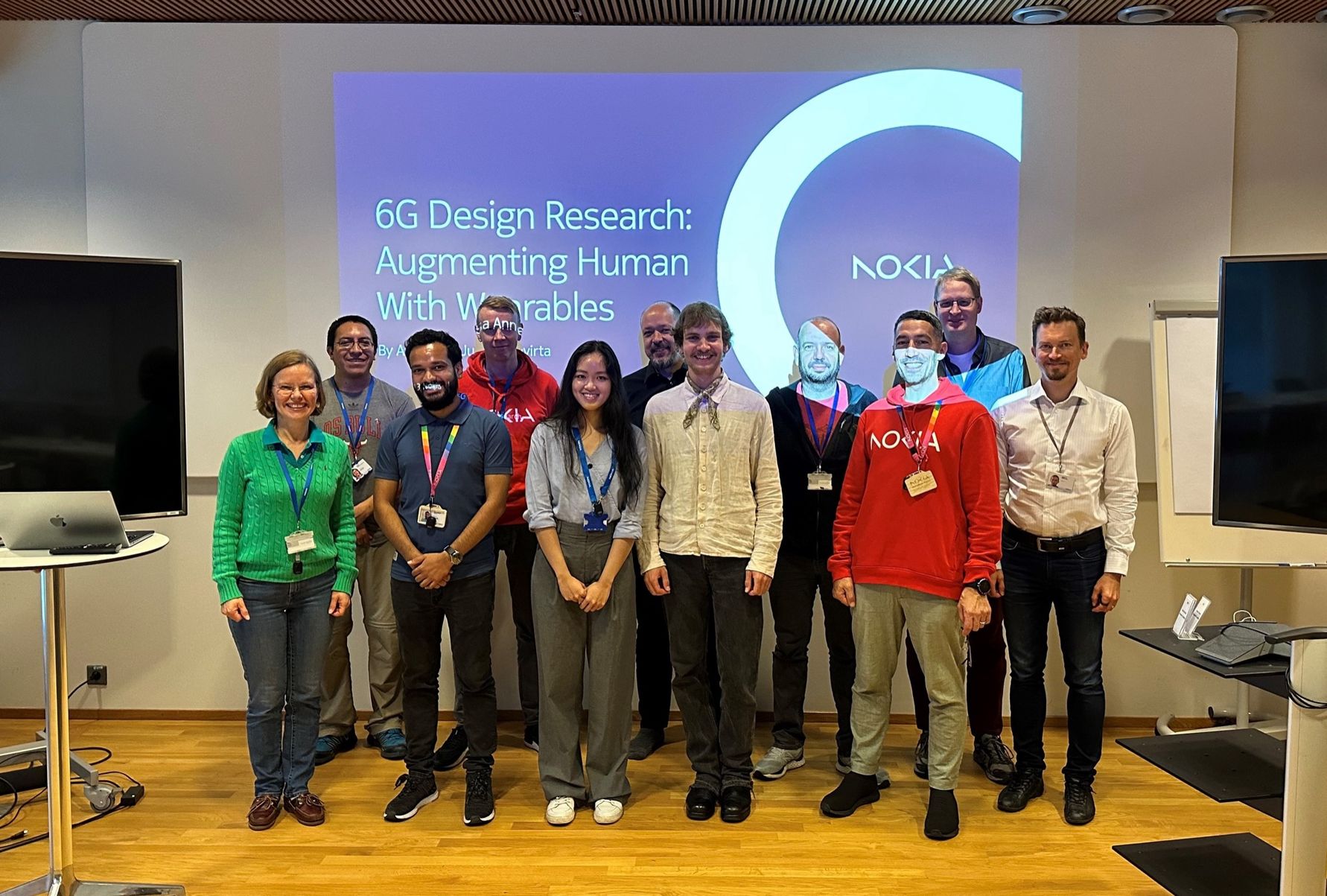
A closing seminar to the whole standards team, leaders included, plus separate presentations to other Nokia leaders during the summer. It fed into how the team framed and talked about value in its 6G work.
Honest Reflection
The most valuable thing the project did was the reframe: before asking what a technology can do, ask why anyone would want it. Putting it in front of the standards team and its leaders mattered most to me, and it's the lens I still reach for.
This was exploratory, pre-standard foresight, so the deliverables are a point of view and a method, not a shipped product or a metric. None of the concepts was tested: the scenarios were speculative, built on today's reference products, and 6G itself was years from standardisation. In work that far ahead, the most you can claim is a change in how the people building the technology frame the question. I think we got that far.