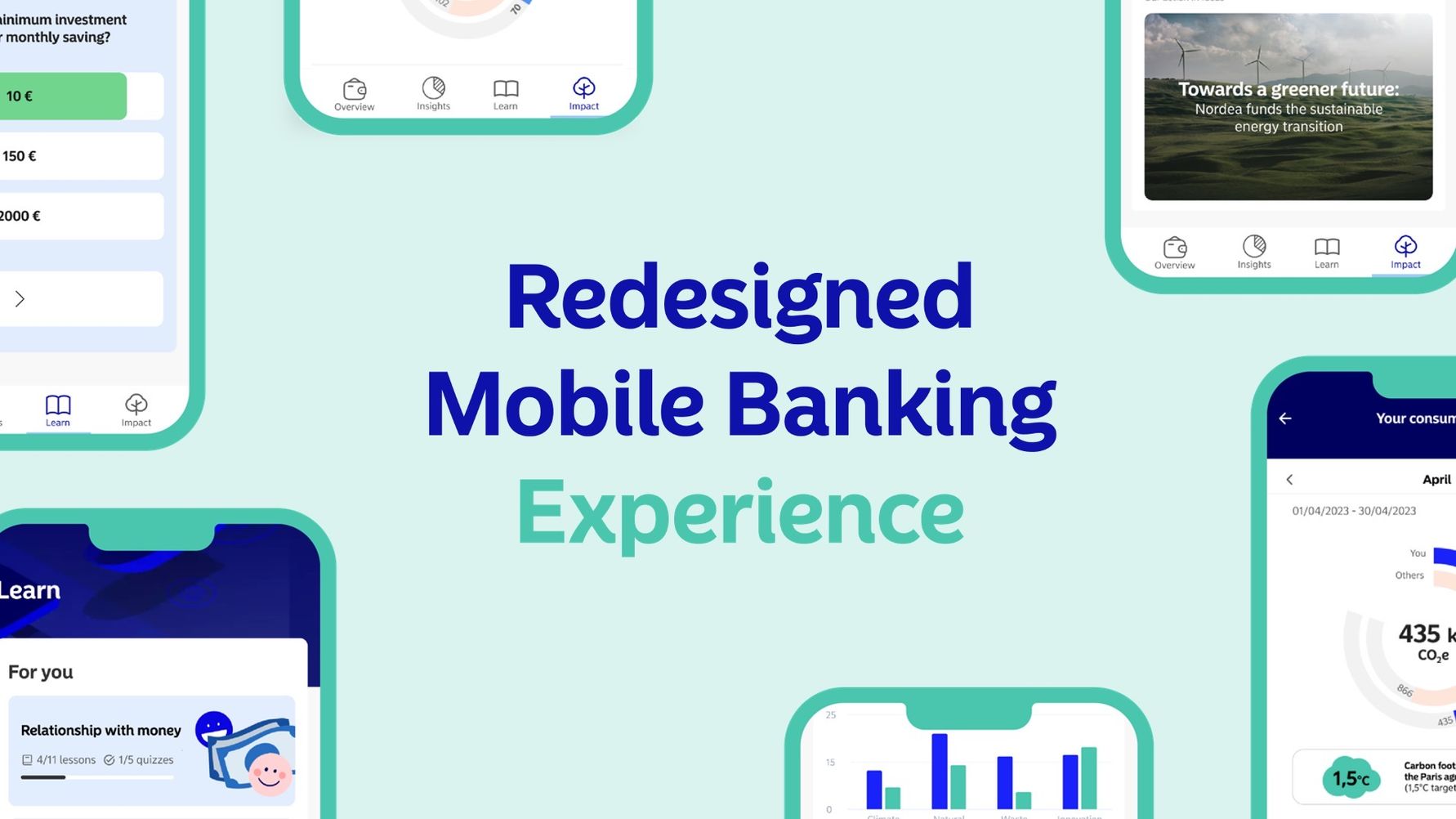
Over seven months, our five-person team ran research with 18-to-30-year-olds for Nordea and reframed a "design a green product" brief into the real problem: a communication and education gap. We proposed a redesigned mobile experience inside Nordea's existing app, with an Impact Hub that scored the customer's and the bank's sustainability on the same scale, and a gamified Learning Hub. Nordea's product team confirmed it could be built, and we presented it to the bank's leadership.
Context & Stakes
Nordea did a great deal on sustainability. Little of it reached the young customers it most wanted to win.
Nordea is the largest bank in the Nordics: 9 million customers, two centuries of history, and a substantial sustainability programme behind it. But 45% of its customers didn't know what sustainability meant in a banking context.
There were signs young people would move for this: in a 2022 Tink survey, 43% of UK adults said they'd switch to a provider that let them see the environmental impact of their spending. The brief was direct: design a concrete "green" offering for 18-to-30-year-olds, and communicate it without tipping into greenwashing.
Role & Team
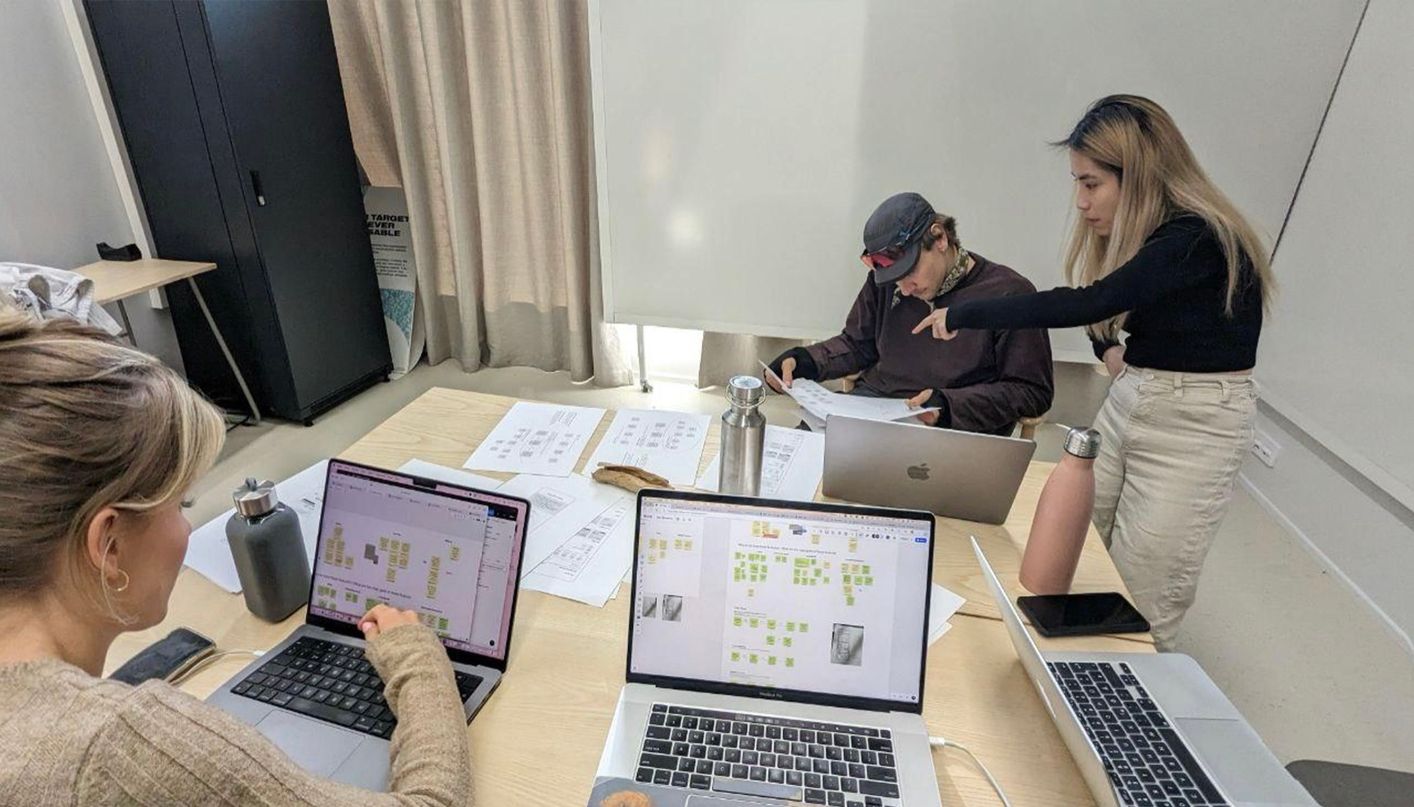
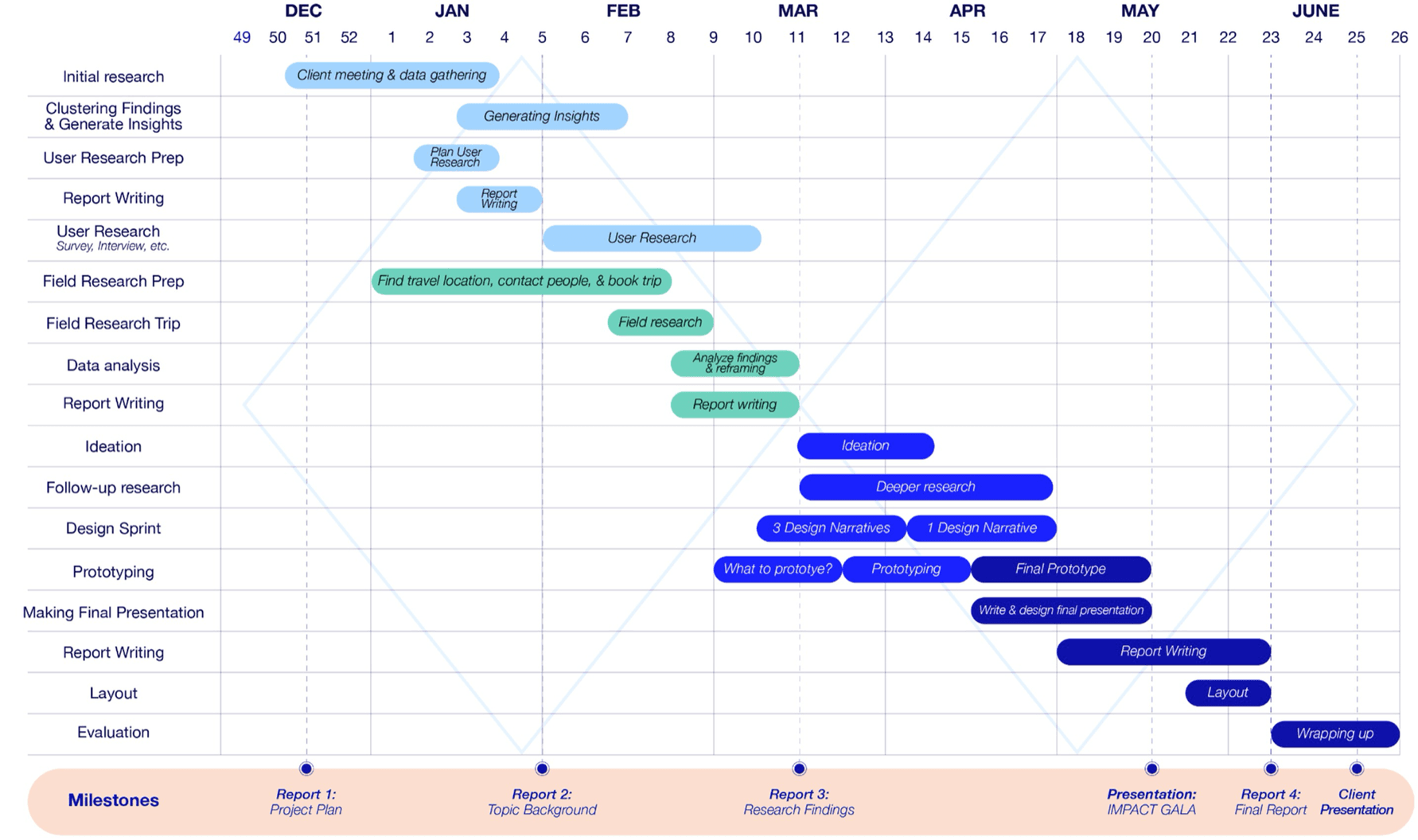
This was a university design capstone, an industry project run over roughly seven months with a five-person multidisciplinary team: two of us from business, two from design, and me from the technology side. We made most calls by consensus and split tasks by what each phase needed rather than by fixed titles, reporting to Nordea's Personal Banking team with weekly mentoring from a design lead.
Two threads were mine. I led the feasibility meeting with Nordea's tech and design contact, where we walked through whether our mobile-app concepts could be built on the platform they already ran. And I was responsible for the wireframe prototyping sessions with users. In Figma I split the build of the screens with two teammates. That suited me: the work moved between what users said, what the design needed, and what was technically realistic.
The project ran as a double-diamond process across four phases, from discovery and field research, through synthesis, into design and prototyping.
What We Found
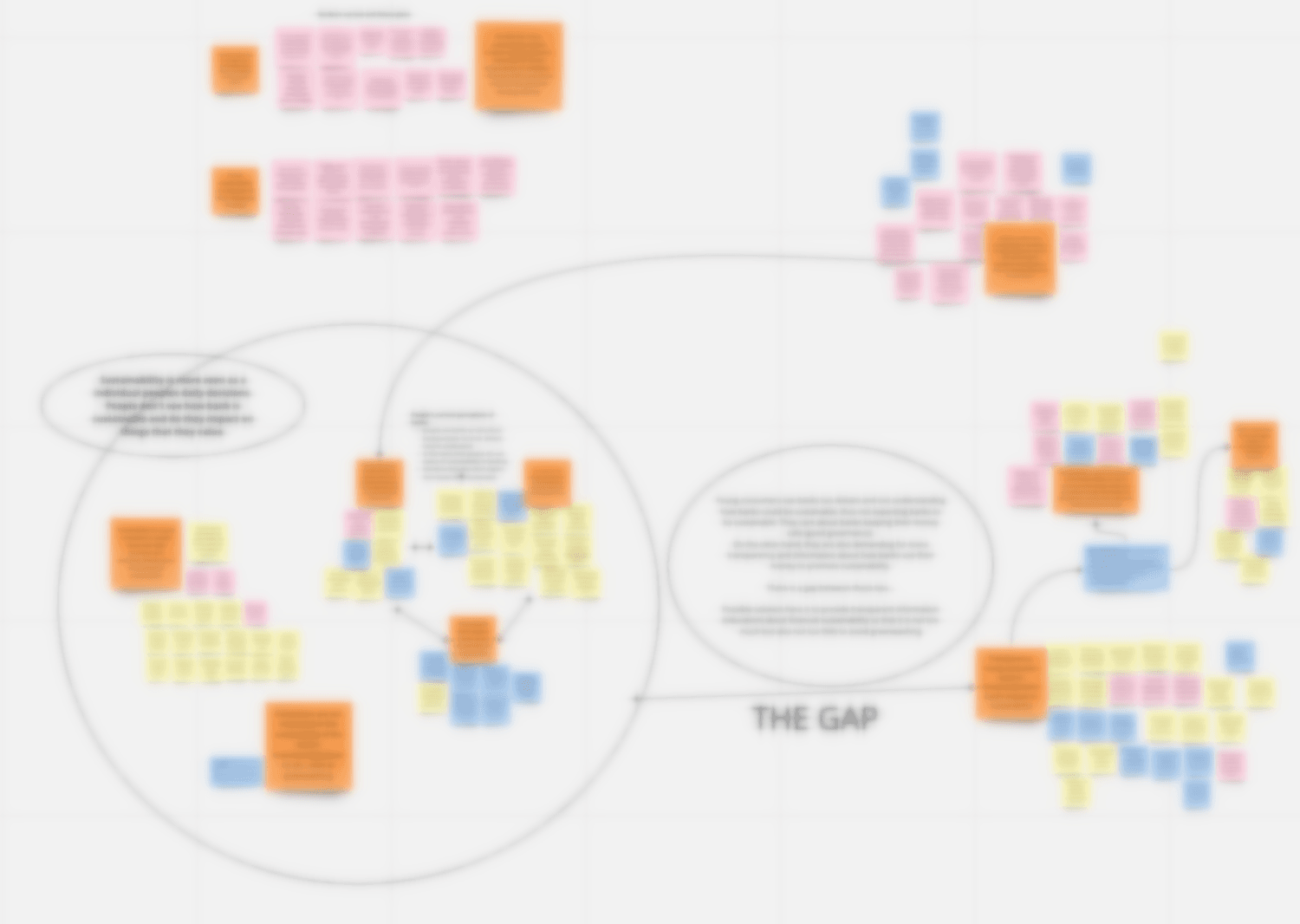
On top of desk research and benchmarking, we ran a three-part qualitative study. An online survey reached 47 young adults; we read it qualitatively, since the sample skewed toward Aalto students. We interviewed 10 people across three life stages: upper-secondary students, university students, and graduates under 30 in working life. We ran expert interviews inside Nordea (responsible investments, responsible product and finance, diversity and inclusion) and outside it, and spent a week in Hamburg and Berlin meeting sustainable and neo-banks, among them Tomorrow, N26, and Cooler Future. Then we synthesised everything with affinity mapping.
A few findings reset our assumptions:
- Young customers saw banks as old-school, opaque, and hard to trust, and didn't connect banking to sustainability at all.
- They were least interested in the things banks love to report: carbon-neutral offices, less paper, even green home loans. They read those as the bare minimum, or as greenwashing.
- What they cared about was where the bank's money goes. Both the users and the experts agreed that a bank's lending and investment choices matter far more than any individual's habits.
- They wouldn't pay extra for "sustainability" in the abstract, only for something with concrete, tangible value.
One finding already pointed to the answer: the single place all of this had to live was the mobile app. It was their main, often only, touchpoint with a bank, and some said they'd switch banks for a better app.
How you use your money matters more than whether a single loan is labelled green.
Problem Definition
Design a green product, said the brief. The research pointed somewhere else: at a bank whose work no one could see.
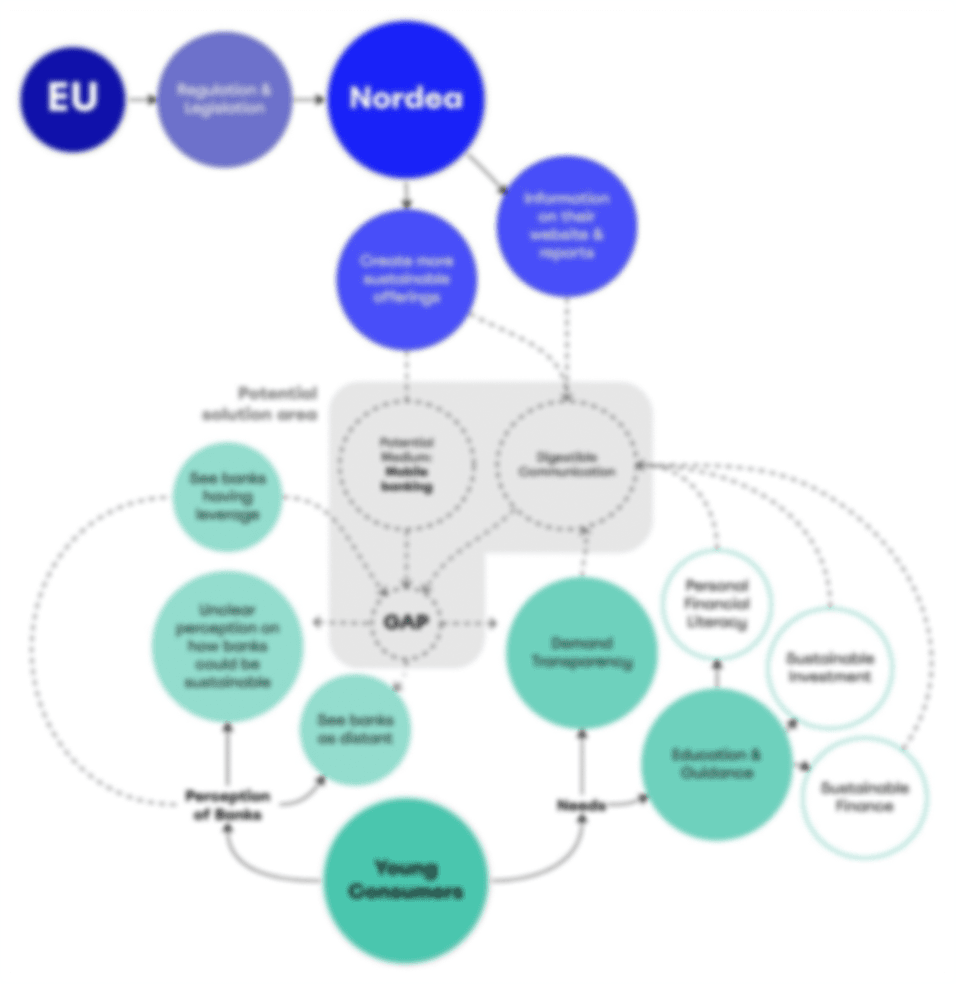
The problem was making Nordea's sustainability visible and meaningful to young customers, a communication and education gap: a bank doing a great deal, customers who couldn't see it, and a subject that stayed abstract right up until it touched their own money.
We drew it as a systems map, with the youth's perception of banks on one side, their unmet need for transparency and education on the other, and tightening regulation pushing the whole field from above. The opportunity sat in the middle: making sustainability tangible and actionable inside the one place young customers showed up. We also accepted there was no single answer for everyone, since needs shift sharply across the 18-to-30 years.
Key Decisions
Build inside the existing app, not a new product
Discarded: A standalone sustainable product or a fresh communications push, which was the most literal reading of the brief.
Chosen: New features inside Nordea's existing mobile app, the youth's primary touchpoint. I took our concepts into the feasibility session with Nordea's tech and design side.
Tradeoff: Less of a headline "new offering" to point at in a pitch, but more likely to reach real users and to survive contact with the platform Nordea already runs.
Give the bank the same yardstick as the user
Discarded: Presenting Nordea's sustainability work as the bank's own good-news story, the way an annual report does.
Chosen: A comparable impact score for the bank, on the same scale as the user's. We made this call after prototype users dismissed Nordea's self-reported impact as PR and flagged it as greenwashing.
Tradeoff: It puts the bank on the same measured footing as a 23-year-old's grocery spend, which is humbling for a 200-year-old institution. We bet it would be easier to believe.
Prototype as a probe, and kill what failed
Discarded: Polishing a single hero concept to reveal at the end.
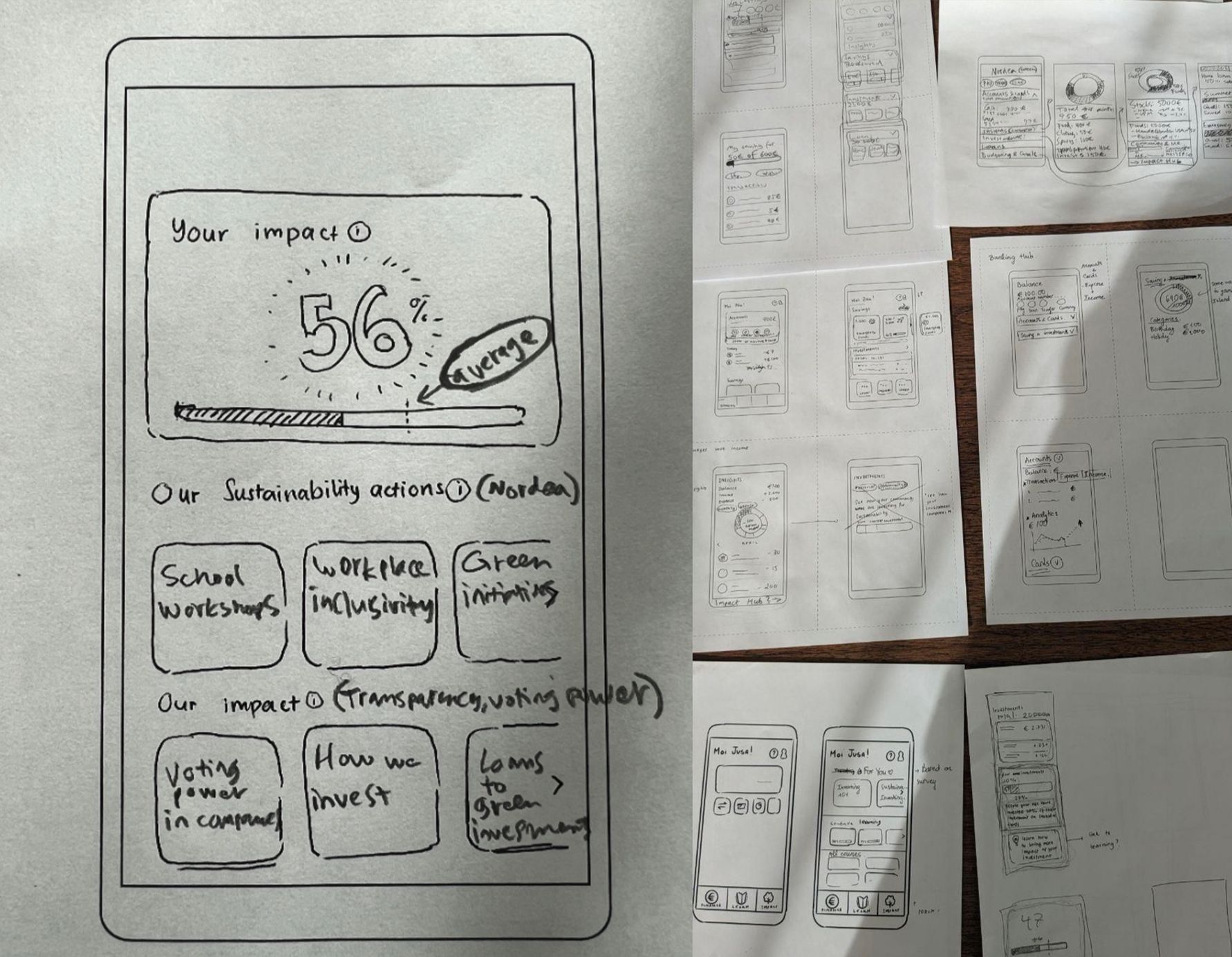
Chosen: Low-fidelity wireframes and paper prototypes tested with nine users, routed by a short onboarding survey into a consumption, investing, or learning flow.
Tradeoff: Rougher artefacts, but we learned fast, and we got to drop a feature that didn't work. A peer-to-peer advice forum sounded right on paper, since young people trust friends over bank advisors, but it fell apart in testing: users distrusted answers from strangers, and it would have needed heavy moderation to be safe.
Solution & Deliverables
We proposed a redesigned mobile banking experience for 18-to-30-year-olds, built into Nordea's existing app, with two features.
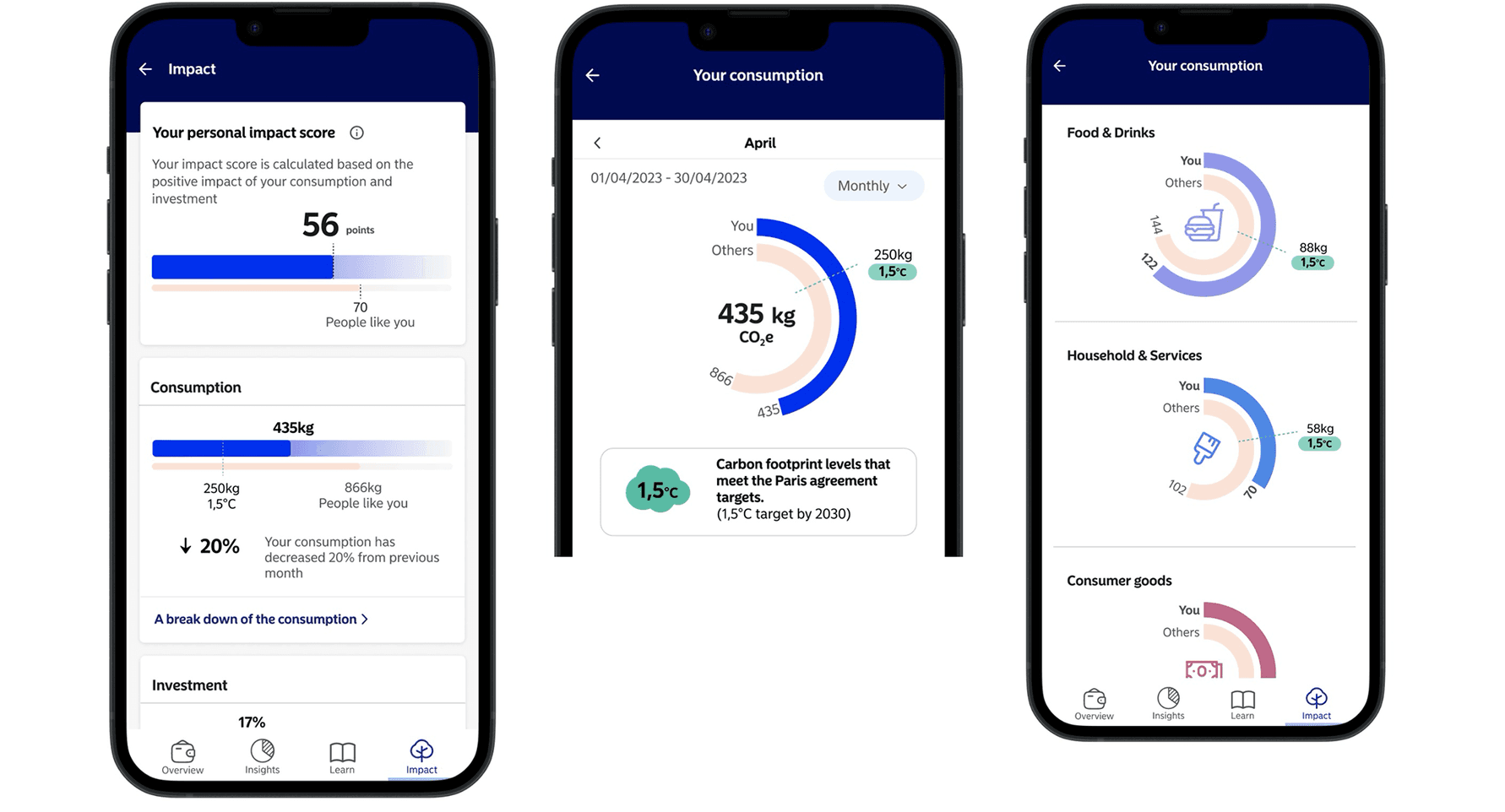
The Impact Hub gave each user a personal impact score across their consumption and investments, broken down by category and benchmarked two ways: against the Paris Agreement's 1.5°C goal, and against "people like you." It also gave Nordea its own impact score on the same scale, with bite-sized summaries of what the bank was doing.
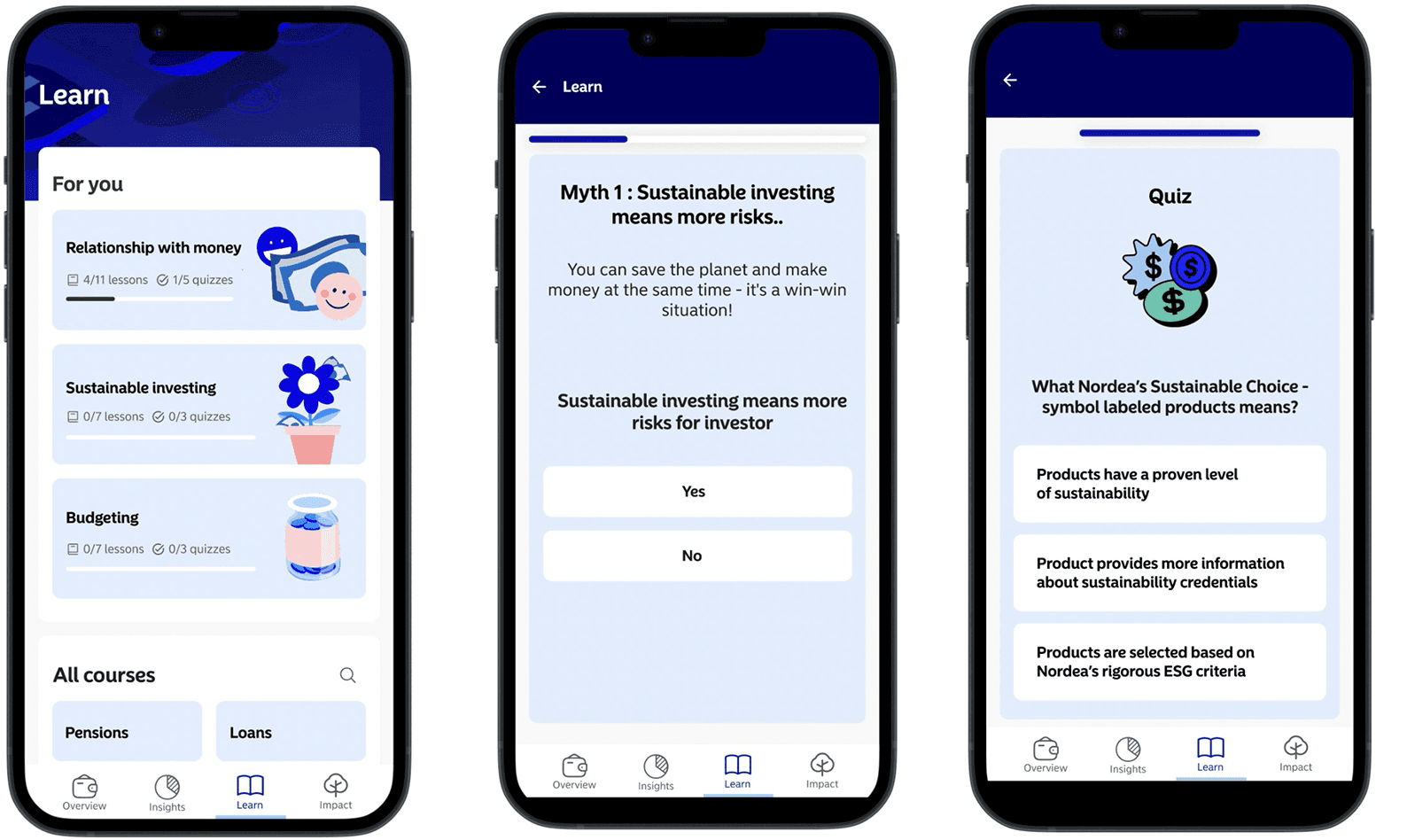
The Learning Hub made financial and sustainability education feel like the apps young people already use: gamified, bite-sized, personalised, with progress to track. We framed it as an extension of Nordea's existing school workshops, carried into the app.
Outcomes
A concept the product team called buildable
In the feasibility session, Nordea's customer-experience and product-strategy people confirmed the features could be implemented for the 18-to-30 segment inside the existing app, with no need for a separate product.
Presented to Nordea's leadership
We presented the final concept in a one-hour session to Nordea's leadership. It was nerve-wracking, and it drew a lot of good feedback.
Honest Reflection
The forum taught me the most. It followed straight from our own research, that young people trust friends over bank advisors, and users still rejected it the first time they saw it. I now treat even well-evidenced ideas as hypotheses until someone has tried them.
What I'd do differently is recruitment. Our sample leaned heavily on Aalto students and the Helsinki area, and we struggled to reach the young people who go straight from vocational school into working life, probably the least engaged with this topic and the most interesting to convince. I'd design the recruiting around that gap from the start, not discover it at the end.
The shared score is the idea I'd defend hardest. These customers had already written off the bank's account of itself, and a score on their own scale didn't ask them to take its word for anything.