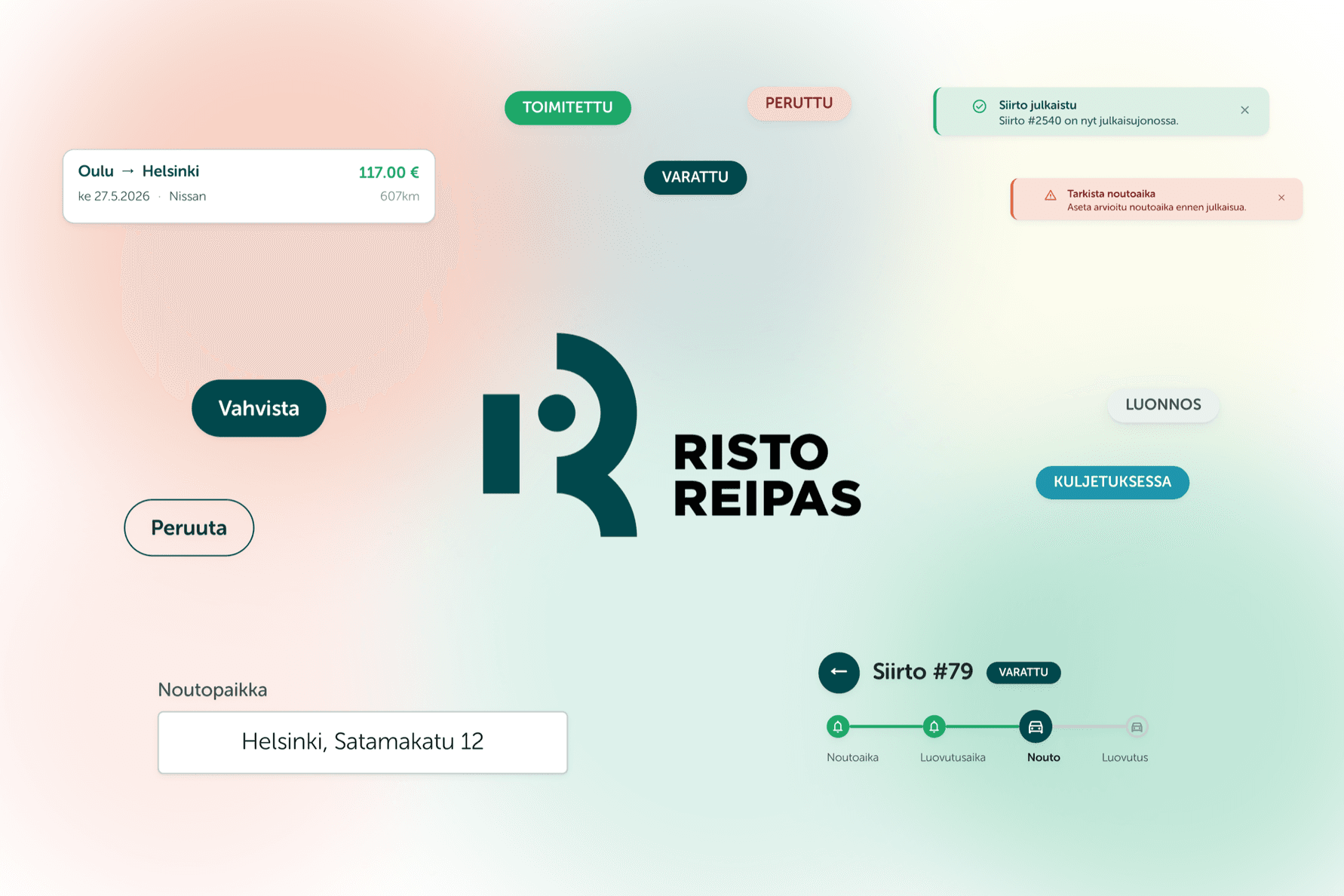
Over four weeks, working solo, I used Claude Code to build a unified, token-based design system for Risto Reipas, whose web and mobile apps had grown for years with no shared design foundation: hundreds of hardcoded values, mismatched fonts, and dozens of one-off shadows and spacings. I also worked through a round of UX fixes that an earlier audit had flagged on both apps. Both codebases now draw from the same foundation, its colours meet WCAG 2.1 AA, and it's been handed to an in-house owner to carry forward.
Context & Stakes
Two apps, built fast over several years, with no shared design system underneath them.
Risto Reipas is a small Finnish startup running a two-sided car-transport marketplace, sometimes described internally as "Wolt for car transport." The web app serves the demand side: the companies booking transport, and the dispatchers who coordinate it from a desk. The mobile app serves the supply side: the self-employed drivers doing the jobs.
It had grown fast, shipping features first. Both apps were built by an outsourced engineering team with no designer involved, so there was no design system holding them together. Colours, type, spacing, shadows and corner radii were hardcoded throughout both codebases, in the hundreds, and the web app still ran on a legacy UI stack of Bootstrap and an old Argon theme. Over the years the two products had drifted into looking and behaving like distant relatives rather than one brand.
A technical and design audit done just before this project had catalogued that inconsistency, along with a set of UX and accessibility issues. Accessibility was the most pressing. The forms had no accessibility support at all, and with the EU Accessibility Act deadline already passed, that was a legal exposure as well as a usability one. Netlight brought me in to build the missing foundation, and to do it quickly.
Role & Approach
The work was solo and full-stack, from the design decisions down to the code that carries them, across both the web and mobile codebases, so nothing had to be handed off between design and implementation.
I leaned heavily on Claude Code to get a job this broad done in four weeks. Nothing it produced counted as done until I had checked it against the real code and the audit.
What I Found
Going through both codebases confirmed what the audit had found: dozens of slightly different shadows, several typefaces and weights used inconsistently, spacing and corner radii picked case by case, and colours hardcoded in the hundreds. On the web side, the legacy theme layered its own defaults on top of all of it.
That came from having no design layer to build on, not from careless work. With no shared system to draw from, each screen had defined its own values, and across years and two codebases that became two apps that no longer agreed with each other.
Problem Definition
Restyling each app by hand would have held for a while, then drifted back.
A restyle would have left everything underneath unchanged. What was missing was a single source of truth: one set of design tokens, for colour, type, spacing, shadow and radius, that both apps draw from directly. With that in place, staying consistent stops being something to police screen by screen and becomes the default.
Solution & Deliverables
I built the system as a set of design tokens that both codebases use, so each value is defined once and applied everywhere. A Figma library is generated from those same tokens, which keeps the design files and the code in step, and a set of lint rules flags any hardcoded value and points to the token that should replace it, so the system can't drift apart again.
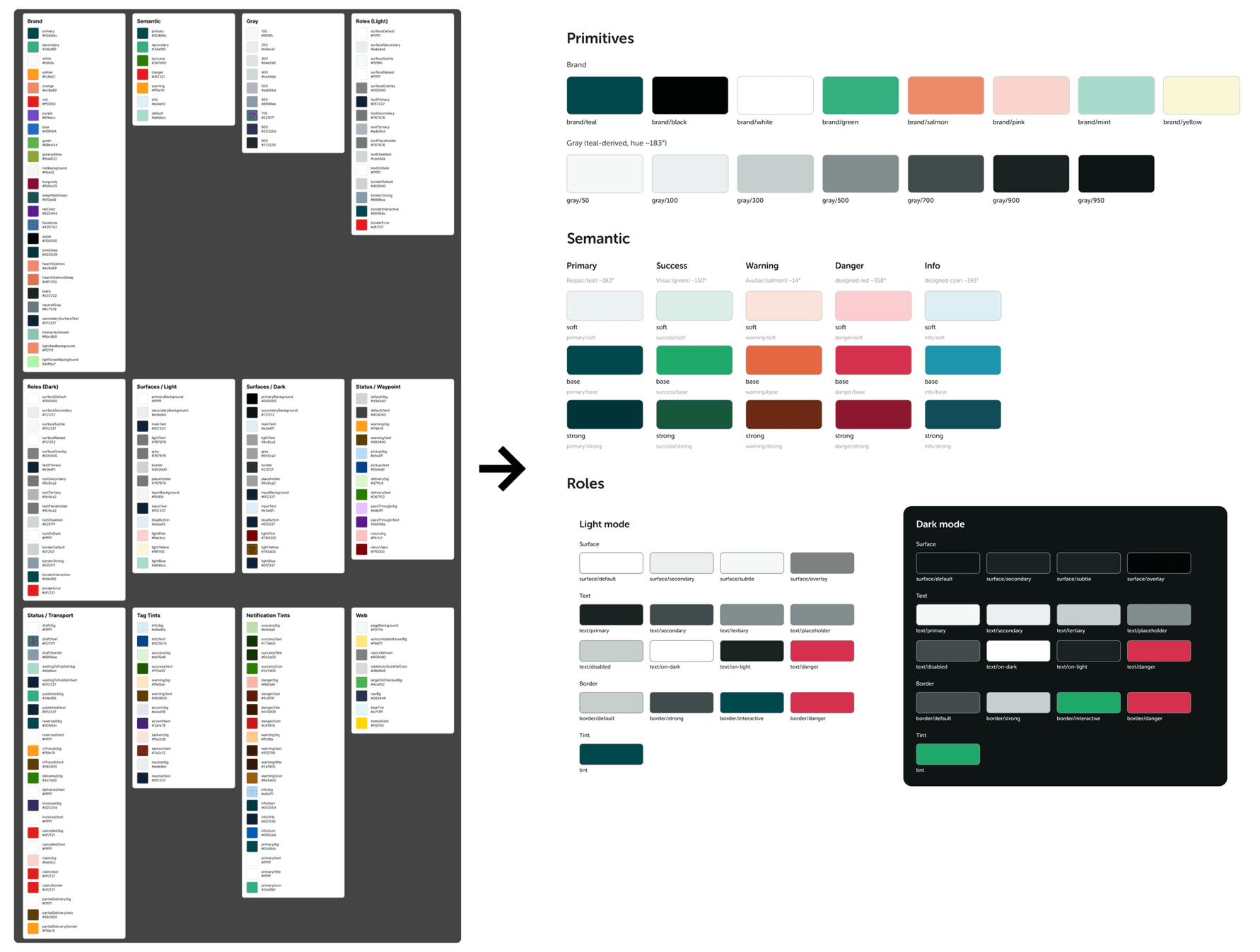
The brand colours stayed as they were; what I changed was the structure beneath them. I reduced a sprawl of overlapping colours and text styles to a small, deliberate set, separated the brand colours from the functional ones the interface uses day to day, and put both apps on a single shared type scale.
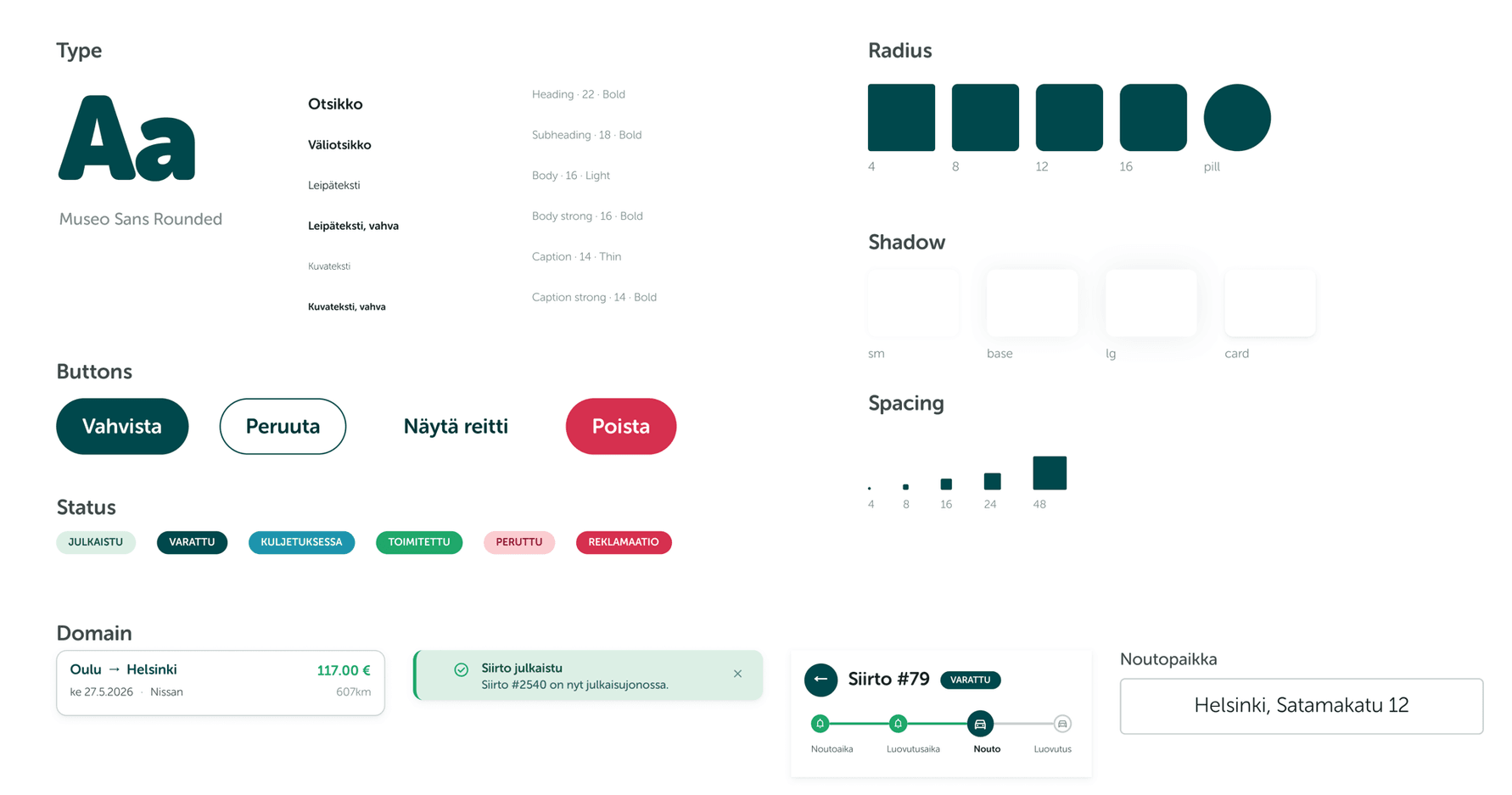
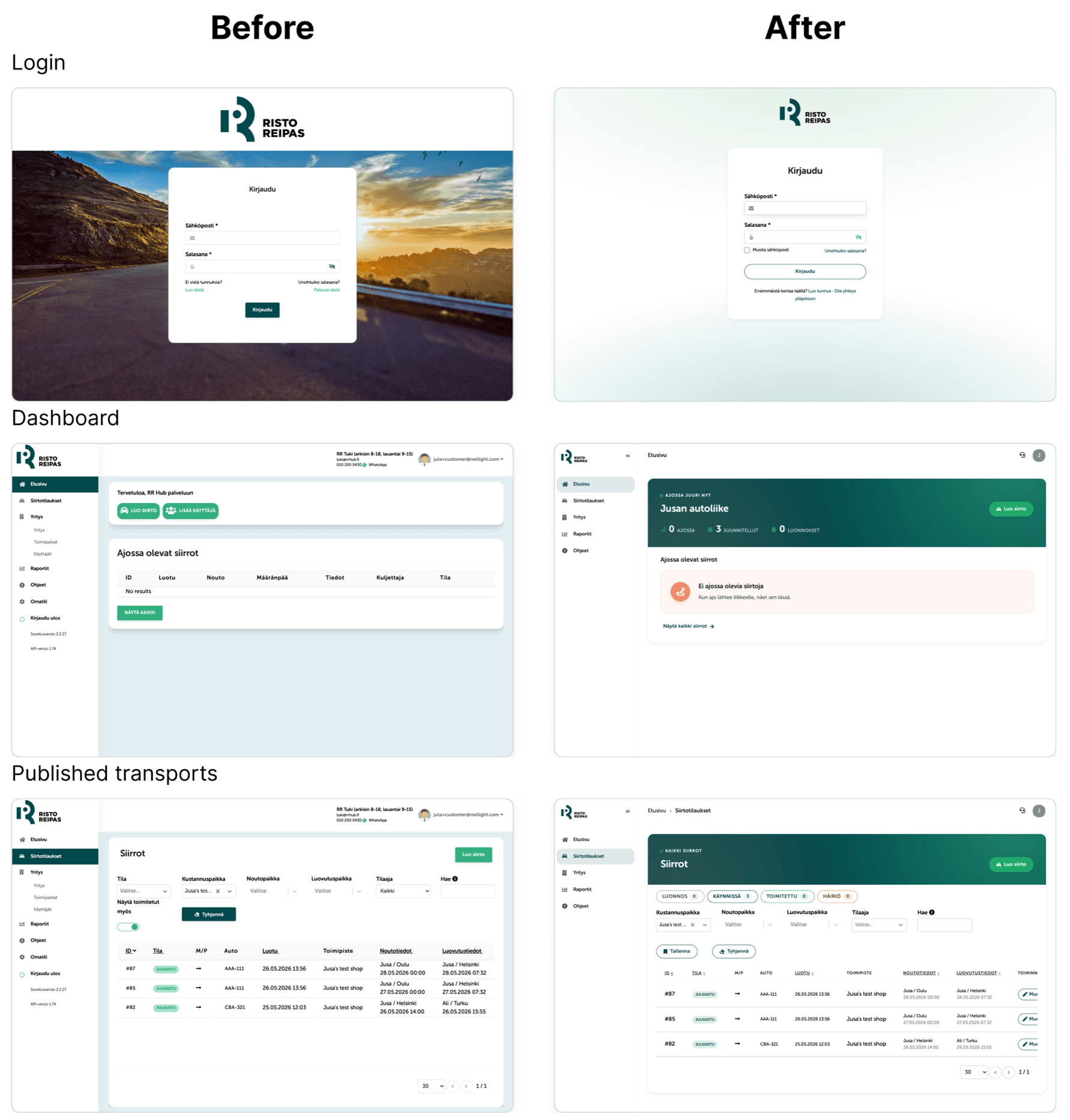
Since I was already inside both codebases, I worked through the UX fixes the audit had raised. The biggest was on web: the form for setting up a new transport job, which had been spread across several screens, is now a single view and quicker to fill in. I reworked the web login screen, redid the type hierarchy and most of the main screens on mobile so they're clearer and easier to read, and fixed smaller things, including modal dialogs whose confirm and cancel buttons had been the wrong way round. The legacy web app came onto the new tokens at the same time, so it could share the foundation without a full rebuild.
Outcomes
From a sprawl to one system
The colour palette came down from roughly 160 tokens to 70, and the text styles from 18 to 6, now defined once and shared by both apps instead of redrawn in each.
Accessibility built into the foundation
The colours were redone to meet WCAG 2.1 AA, and every colour pairing is checked against it, so contrast is handled once, in the foundation, instead of retrofitted screen by screen. The forms that had no accessibility support now have it.
Handed over to carry forward
I built it to be handed over, and the in-house owner who runs it was involved throughout, so picking it up was a continuation, not a fresh start. Both the web and mobile apps have since gone out to users.
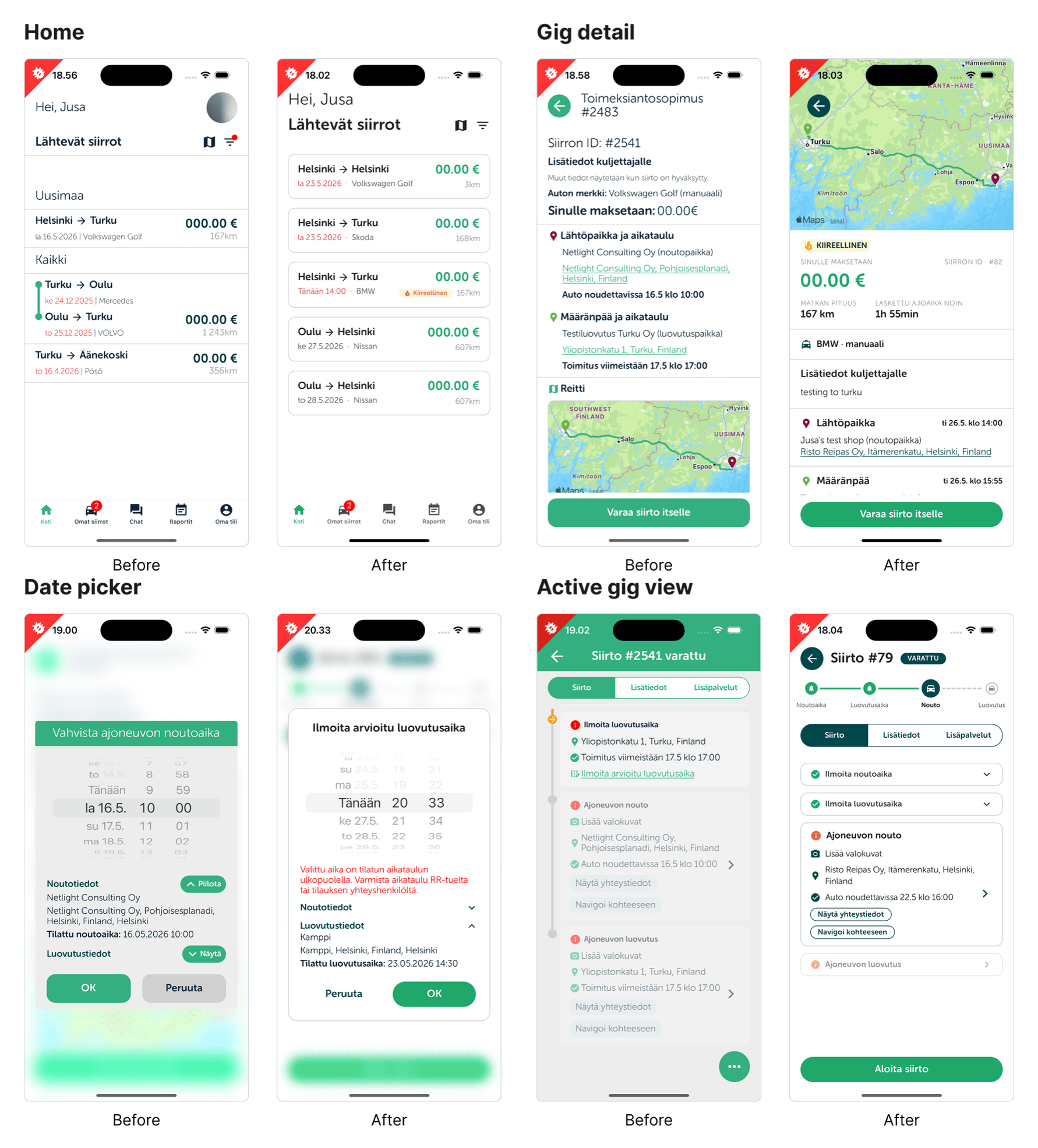
Honest Reflection
The project kept changing shape. The scope grew and shrank as I learned what the two codebases actually needed, and the plan I finished with wasn't the one I started with. With a few weeks of work set against years of accumulated inconsistency, that was probably unavoidable.
For all the speed Claude Code added, the design judgement was the part that mattered: deciding what the small, deliberate set of values should be, and seeing that a foundation built once and shared was what these apps had been missing.